
What does travelling bring? Links between tourism and self-actualization

Introduction. Tourism encompasses a broad spectrum of research themes, sciences and theoretical approaches, including economics, geography, history, sociology, psychology, management, diplomacy, marketing or culture. Over the past decade, the tourism industry has undergone significant transformations, not only from an economic standpoint but also in terms of a deeper paradigmatic shift caused by diverse influences, contradictory tendencies, and often antagonistic or ambivalent forces. Although the industry continues to exhibit characteristics of peak postmodernity (Cohen – Cohen, 2012; Firat – Schultz, 1997), these elements are gradually diminishing. Nowadays, the industry operates much like an elastic string, stretched between two extreme poles, creating a tension that drives constant changes. This dynamic is reflected in phenomena such as fluid types of offerings, the emergence of multi–option customers, hybrid motivations, the deconstruction of tourist behaviour patterns, the dysfunction of classical segmentation, and the fragmentation of markets into ever smaller niches.
The pendulum of the tourism industry swings between opposing forces, including permanence and temporariness, constancy and flux (Dujmović – Vitasović, 2015), quality and quantity, content and form, fragmentation and homogenization, materiality and spirituality, truth and falsity, latency and manifestation, adaptability and stability, simplification and complexity, humanization and technologization, unification and hyper–personalization, authenticity and representation. This syncretism – a desire to have best of both worlds – results in chaos, absence of structure and uncertainty. And when this comes, we naturally look back and we seek help and advice in a deeper understanding of individuals and society.
Contexts of tourism and psychology. The relationship between tourism and psychology is not a new topic. Cohen (1979) introduced a four–pronged approach to studying tourism, incorporating emic, process, contextual, and comparative perspectives, with a focus on the anthropological, sociological, and psychological dimensions. Over time, particularly due to the rapid development of tourism as a profitable sector, the attention became more focused on the economic aspects. Psychological factors were reduced to instruments aimed at increasing consumption, occupancy, or attendance through marketing strategies and consumer profiling. However, as Džuka – Štefko (2019: 99) mention, economic research in tourism finally stumbled upon the need to understand the complex psychological factors involved. Šimková (2014: 318) points out that tourism activities represent not only an economic investment but also a personal and emotional one. But where exactly does tourism meet with psychology? Well, in many places. One of the first complex works in this discipline was done by Pearce – Stringer (1991: 139 – 150) who emphasized that tourism psychology covers: a) psychological level studies, b) studies in cognition, c) individual difference, d) social behaviour and e) the environment. A few years later, Pearce – Packer (2013: 4) wrote that psychological research in tourism is concerned with: a) major themes directly related to tourism (decision–making, behaviour, motivation, satisfaction, and social interaction); b) minor themes directly related to tourism (perception, memories, psychological benefits, identity, self–awareness); and c) indirectly related themes (knowledge, understanding, interpretation, and involvement). As we see, this wide array includes many topics. It is e.g. consumer behaviour (Cohen – Praying – Mortal, 2014), the psychological training of tourism personnel (Barth – Leaks – Hermochová, 1986), personality theory and traveller types (Plog, 2001), psychological characteristics as predictors of behaviour (Džuka – Štefko, 2019), relationships between tourists and the local population (Doxey, 1975), travelling for individuals with mental health challenges (Mackett, 2021), travel psychiatry (Flahery – Chai – Hallahan, 2021). Several authors also examined travel as an escapist model or coping mechanism (Neal – Sirgy – Uysal, 1999), or as a ritual (Půtová, 2019: 58). In recent years, attention has mostly focused on the issue of tourism as a path to well–being (McCabe – Johnson, 2012; Personnen – Komppula, 2015; Figurová, 2020; Sirgy – Kruger – Lee – Yu, 2011; Gajdošová – Madro – Valihorová, 2018; Konstantopoulou – Valeras – Liargovas, 2024). Tourism and psychology meets also as an object of research in many domestic and foreign final theses (Šumichrastová, 2017; Sokolová, 2022; Lopuch, 2017; Milde 2010).
Scheme no. 1: The nexus and the main common research themes of tourism and psychology
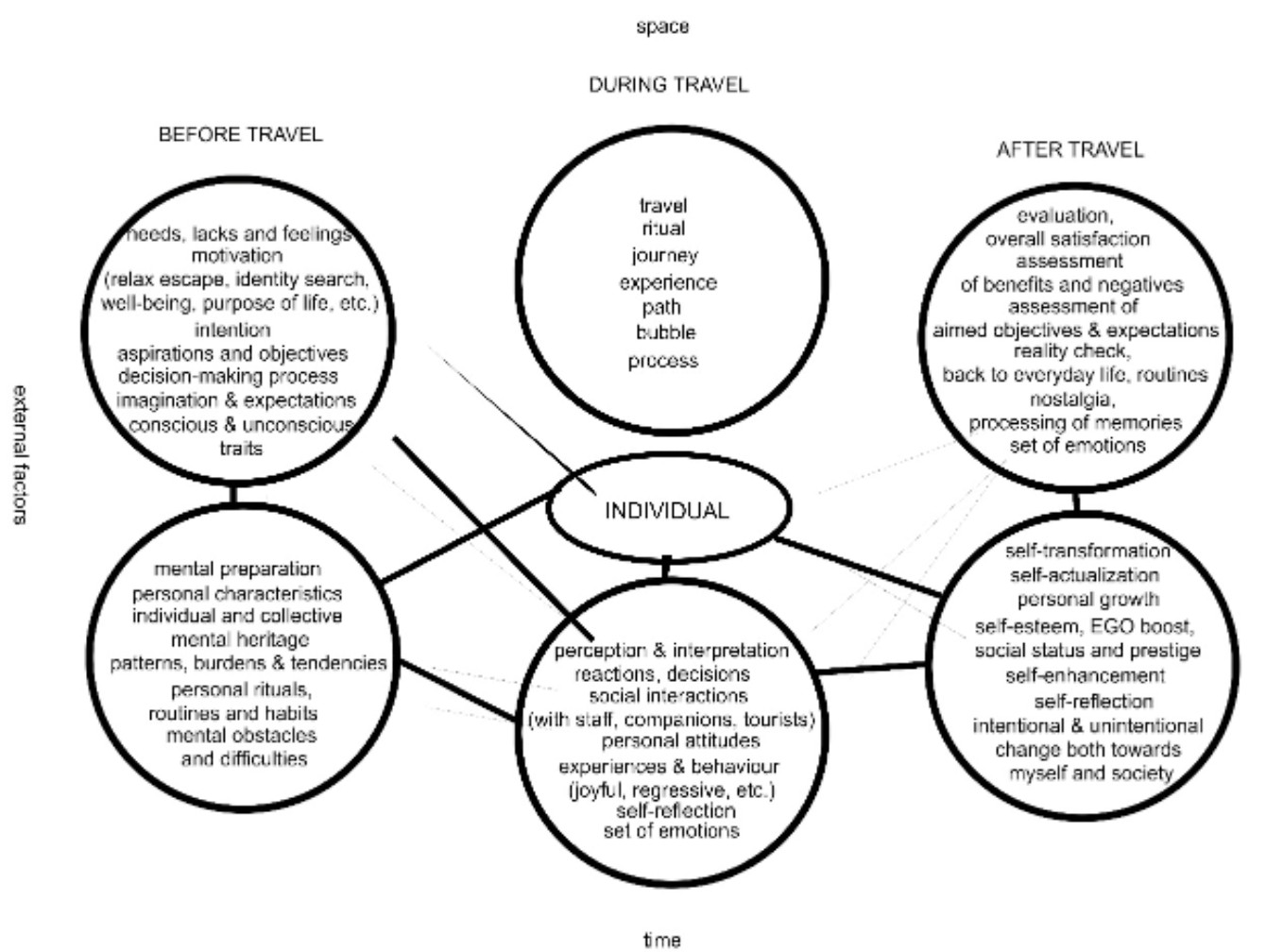
Source: Michala Fúsková, 2025
Travelling as a vessel to self–actualization. In an era marked by isolated living, narcissism (Gažová, 2024), the absence of authority, alienation, identity crisis, and the search for universal narratives (Otčenášek, 2012), it is unsurprising that the desire to return and be in tune with one´s self is experiencing a cyclical rise. This pattern reflects a social constant: the more a person‘s sense of self diminishes, the more it dissolves anonymously into collective uncertainty (Jung, 1994: 62), prompting a return to the search for the SELF (Ting – Kahl, 2016; Chen – Joya – Choi – Choi, 2017). The concept that most effectively aligns with the aim of our research is self–actualisation[7] (Goldstein 1939, Maslow 1943) as a “process of becoming self”, leveraging one´s abilities to a full potential. We see the self–actualization as a precursor (or a key element) for achieving subjective well–being[8]. In this sense, travel can serve as a catalyst for self–actualization by providing transformative experiences and enhancing individual´s overall well–being. It is also a general reflection of a complex shift from objective to subjective, from external to inner perspective.
Scheme no. 2: Self–actualization as a concept
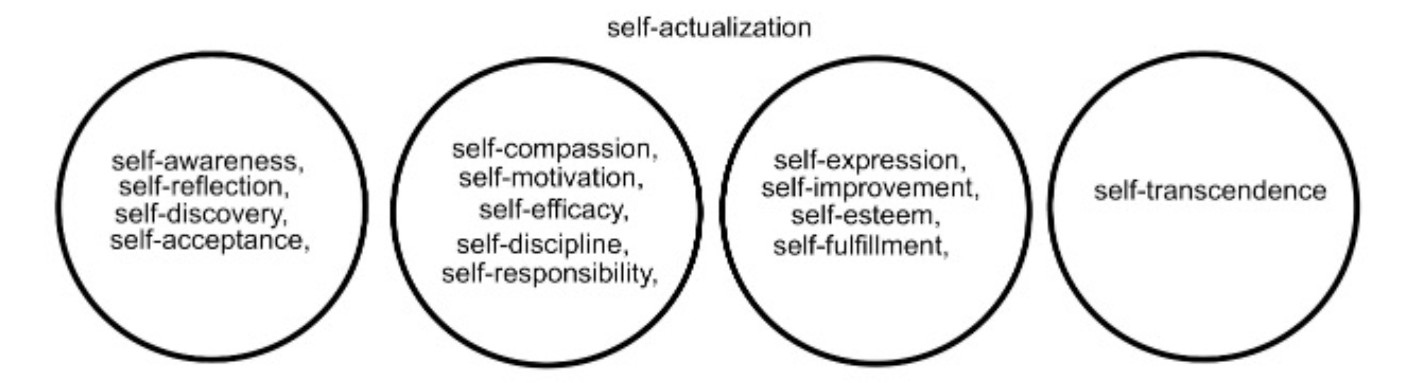
Source: Michala Fúsková according to Kaufman, 2018
The shift is visible not only in theory, but it is also reflected on the market itself. The emergence of more sensitive generations, such as Gen Z, Alpha and (in a near–future) Beta, who have become more attuned to mental health and who are now entering the market, both on a demand and a supply side, (indirectly and directly) determined these changes. We can find it behind the growing demand for holistic, ceremonial, healing, analogue, transformative, altruistic, adventurous, spiritual, physically or mentally demanding, extreme, ascetic, and risk–oriented travel experiences (Holm – Lugosi – Croes – Torres, 2017). It is also reflected in currently popular concepts such as immersion, mindfulness, eudaimonia (Sirgy – Uysal, 2016). There is an increased demand for sensoryrich, physically engaging activities that prioritize engagement over mere observation. The rise of event tourism is another manifestation. These events offer a fleeting but profound departure from normality. (Filep – Volic – Lee, 2015) This shift is also reflected in the redefined anchor of travel itineraries, where destinations are replaced by experiences because authentic, and relevant forms of being are easier to internalize and can have a lasting impact on an individual’s thinking and behaviour.
What travelling brings to university students? To gain deeper insight into this topic from the perspective of a current young generation, a brief electronic standardized anonymous questionnaire was distributed to students in the Cultural and Tourism Management program at the Faculty of Arts, Constantine the Philosopher University in Nitra in January 2025. The survey consisted of 10 simple open-ended prompts with an unlimited space for text answers.[9] This method allowed us to obtain authentic responses while maintaining respondent´s anonymity. At the same time, it provided sufficient space for genuine answers without scaling, which is more suitable for this type of survey. A total of 41 respondents, all members of Generation Z born between 1996 and 2012 (as it is defined by ETC, 2020), completed the survey. These answers were not individually statistically evaluated, but put in cluster groups according to their similarity, and sorted by frequency. We did not analyse the gender, residence, or economic background; what was important for us in this case was only the age criteria as we tried to capture the opinions of the Generation Z. We acknowledge the limitations of cognitive biases and the usage of surveys in psychologically oriented research, as outlined by Ferjenčík (2000: 183). We view this only as preliminary research and the first step toward more complex investigations. Due to space constraints in this paper, we present the results of five selected moduls mostly related to self–actualization.
The first question (Q1) focused on motivation in a simple question: “Why do you travel?” Motivation has been widely addressed by various tourism scholars (Crompton, 1979; Iso –Ahola, 1982). It is one of the most commonly examined categories in psycho–social tourism research. The most frequently mentioned intentions in our survey was exploring and discovering the unknown – new mentality, culture, people, language, lifestyle, cited by 25 respondents. The categories self–discovery, self–development, learning process were noted by 10 respondents. The issue of escapism (momentary escape, escape from ordinary life, change of environment) emerged in 9 responses. Travelling as reward, hobby, lifestyle, motivation, inspiration appeared in 8 answers, while relaxation and recreation was explicitly mentioned in only 3 out of 41 answers. However, the most common answer was a combination of various urges and motives. Travelling with intention has become a significant feature of contemporary tourism. It shifts the focus from traditional materialistic and hedonistic motives toward the search for meaningful experiences.
In the next question (Q2), respondents were asked to reflect on subjective benefits travel brings. Respondents primarily highlighted the concept of stepping outside their comfort zone, confronting personal boundaries (11) and feelings of change, novelty, freedom, anonymity, ease, liberty, life outside of established conventions (10). The process of learning, educating, finding skills, revealing abilities, improving oneself (7) also stood out significantly. Other commonly mentioned benefits included self–confidence, self–responsibility, overcoming anxiety and fears (5), as well as the development of intuition, gratitude and humility (4). The following anonymous statements illustrate how travelling influences e.g. the process of self–discovery: “When traveling, I discover my leadership skills, which I usually do not have in my nature and do not need to use in everyday life. Sometimes traveling requires more skills than we usually show in everyday life. Therefore, it reveals our hidden qualities, abilities, and perhaps even problems. The more you travel, the more you get to know the world and the more you get to know yourself.” The sense of anomie, normlessness, regressive behaviour (Dann, 1979) was for example mentioned here: “It gives me a sense of freedom and the feeling of having mastered something that I usually leave to others.” or “When I am in a foreign environment, I feel free with no need for hypocrisy, because if I mess something up, no one will recognize me.” or “I feel more energized, as if I‘m not playing any social role in that moment.” The natural neophilia of the Generation Z is best illustrated by a statement: “I like to get out of my comfort zone, or rather, new places are my comfort zone.”
In Q3, respondents were asked specifically about solo travel as the rise of this form of travelling is mostly associated with Gen Z[10]. Solo travelling is strongly linked to the self–actualization concept. While some admitted they had not yet travelled alone (3), or they preferred group travel (6), the majority emphasized the (experienced and expected) positive aspects of solo travel (28). Solo tourism, they noted, demands more responsibility, self–reliance, offering more space to reflect on personal needs and preferences. One anonymous respondent commented: “A person does not have to adapt – that way, we find out what really fulfills us and whether it is or is not our lifestyle.” Another stated: “It is psychologically more demanding to travel solo. But that’s how you gain the most valuable experience.”
The next question (Q4) explored the processes that follow after returning home, because they are a crucial part of the self–actualization process. For about a third of respondents, positive emotions such as joy, satisfaction, lightness, fulfillment, contentment (12) prevailed. Surprisingly, many also reported joy from returning, a positive relationship with home, routines and personal space (10). However, 25 respondents experienced a mixture of feelings including sadness, apathy, anxiety, restlessness, the burden of responsibility as they returned to everyday life. Most of the respondents (20) admit that they deal with these emotions by simply planning another trip, creating a certain loop. As one anonymous respondent explained: “It always takes me a while to get back to reality. Anxiety and depression occur after arriving, and the only way I feel right is by planning another trip abroad.” Perhaps the following statement encapsulates this idea best: “You have to travel until you find what you are looking for. It doesn‘t have to be a physical place or something material. It can be something that changes within you during the journey – a thought, an opinion, an attitude, or an experience.”
The final modul (Q5) examined whether respondents view travel as a tool for self–actualization in general, either intentional or unintentional, in a simple prompt: Does travelling bring you closer to SELF? Some (7) noted that this process largely depends on factors such as the purpose, form, duration, destination, travel companions (Zhu – Fan, 2018). A few respondents admitted that they “do not feel this, intentionally avoid it, or are unaware of it” (7). However, the majority agreed that travel is a vessel to self–actualization (23 statements), particularly during solo travel (6). One respondent expressed: “I feel that the soul and body are connected when travelling. My Self is restarted by travelling.” For some, travel represents an escape from oneself, for others, it is a return to self or even a rediscovery of who they truly are. In this sense, travel helps us not only to learn but also to change or rebuild ourselves, offering transformative potential.
To summarize – although the respondents were not educated in psychology, they intuitively pointed out almost all the components leading to the self–actualisation state, mostly in the categories of self–discovery, self–reliability, self–awareness and self–esteem. Travelling can initiate, accelerate or even stop the process of self–actualization, both intentional and unintentional, conscious or unconscious, depending on many factors. It is definitely one of the most effective techniques to invoke self–actualisation, together with art, journaling, meditation, lifelong learning, volunteering, etc. But to achieve some personal change, it is essential to integrate travel experiences into everyday life. Because not everyone undergoes a transformation during travel and not all types of travelling affect these processes. Many individuals may not even be aware of them, as seen in the classic tourist vs. traveller debate. Moreover, travel experiences, by their very nature, are ephemeral and interpreted subjectively. What might be a life–changing event for one person may have little significance for another. Travel can offer insight, but it is not a comprehensive and guaranteed conduit for self–actualization. As one respondent shared: “If you do not feel good at home and do not like returning home, you will not feel good anywhere in the world.”
Appendix – What makes us travel?[11]
“To live life rather than simply survive it – a straightforward idea with countless interpretations. For many, travel becomes a way to escape themselves and break free from routine. It serves as a deep breath before returning to the rhythms of everyday life. But when this breath turns into a prolonged journey spanning months, reintegrating into familiar patterns can become a challenge. There is often a profound impulse that drives individuals to embark on such journeys. A veteran who, after months of being unable to walk due to an injury, set off on a long trail once recovered is just one example. These transformative journeys frequently follow critical moments – emotional collapses, life transitions, or periods of uncertainty.
If travel can be likened to a labyrinth, then travellers enter it without a thread to guide them back. Their objective is not simply to find themselves but to actively recreate who they are. This concept is underscored by the tradition of “trail names“, commonly adopted by hikers, bikers, and long–term travellers. These names, often inspired by a person‘s character or a particular situation, symbolize a shedding of past identities. One compelling story involves a woman who went by the name Lightning. Rejected by her community due to her sexual orientation, she embarked on a journey with the intent of ending her life. Standing at the edge of a cliff, she encountered another traveller, a meeting that may have ultimately saved her. Over time, her travels became a process of transformation, culminating in her ability to find peace and happiness.
Travel is also a test of resilience and courage. Among mountaineers, there is a popular saying: If it doesn’t scare you, it’s not a real challenge. Many travellers push themselves to cover vast distances, endure harsh conditions, and conquer high peaks. The mountains, timeless and indifferent, demand self–reliance and focus. Personal stories of close calls, such as nearly slipping on snowfields or navigating treacherous descents, illustrate how survival becomes a deeply personal endeavour. And yet, amidst these challenges, travellers often find a rare tranquillity. The mountains do not care whether one succeeds or fails. They remain eternal, offering a reminder that human concerns are fleeting and insignificant. Perhaps that is why, for so many, travel – whether on trails, roads, or mountain paths – becomes not just an escape but a journey toward balance, self–reliance, and personal growth.“
Image n. 1: Morning after night on the summit of Großer Priel, 2515 m a.s.l.
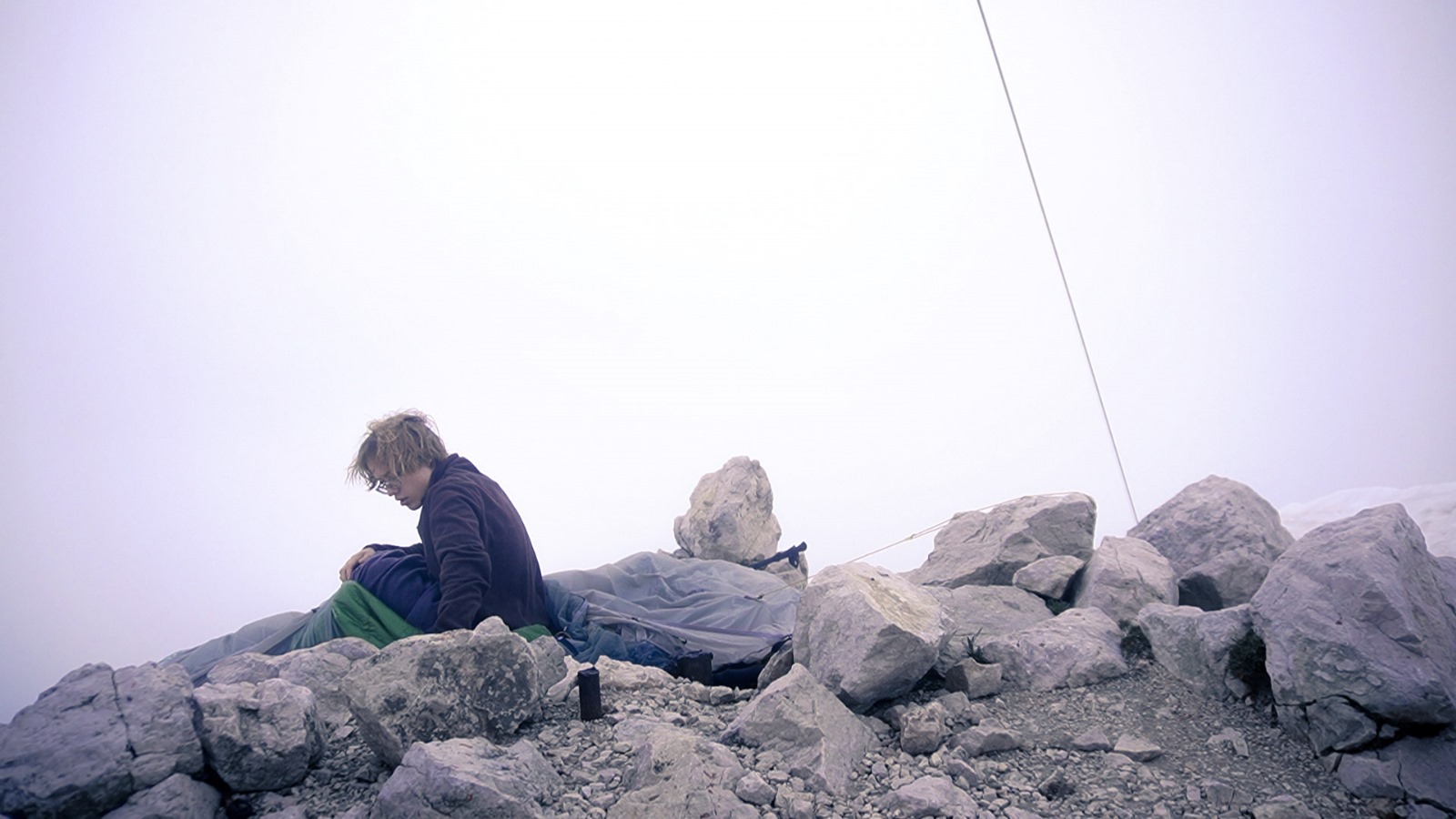
Source: Nikita Grachev, 2024
Image n. 2: The difficult ascent of Großer Priel, Austria
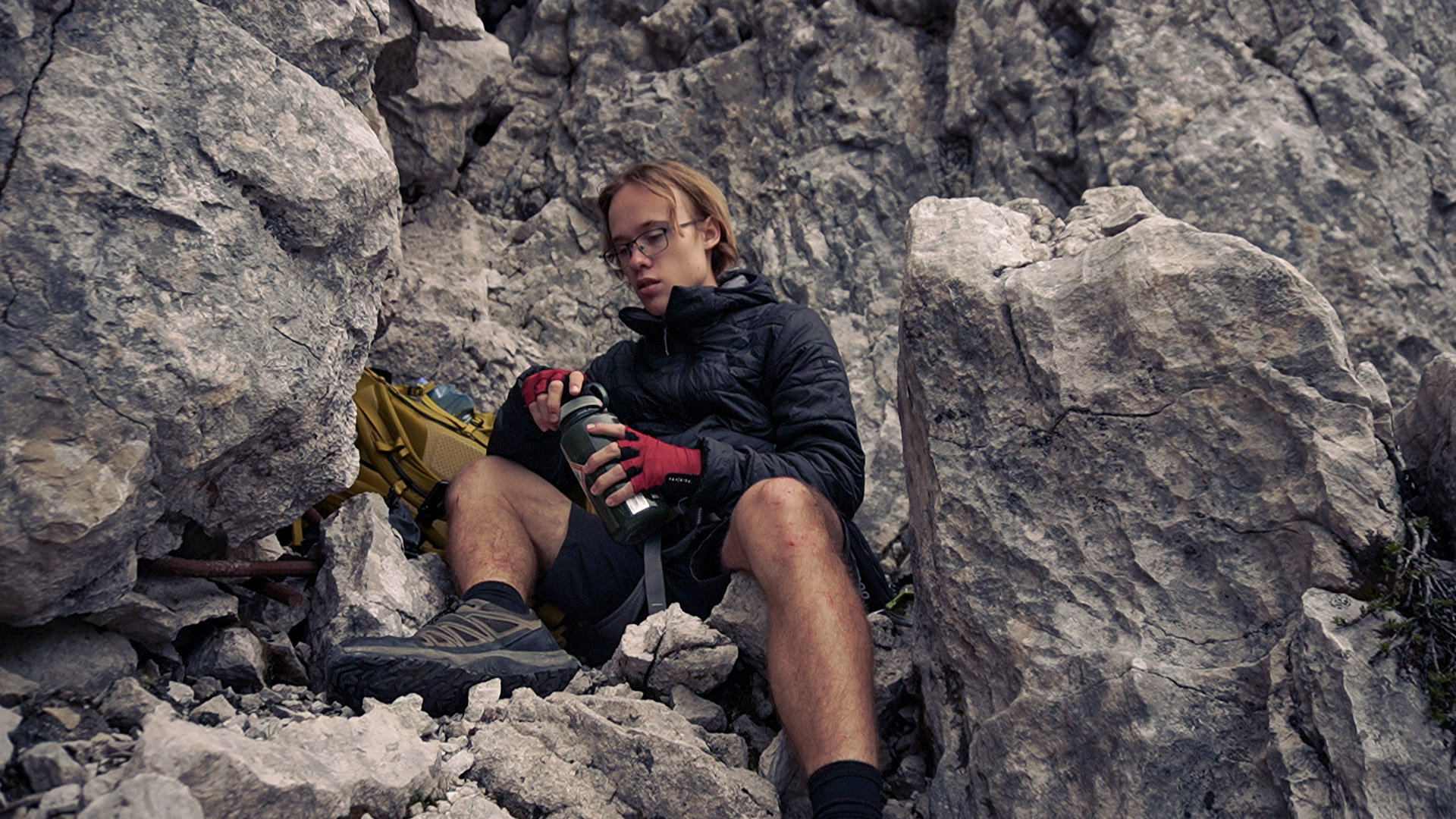
Source: Nikita Grachev, 2024
Image n. 3: On the Slovak National Uprising Trail, Low Tatras, 2024
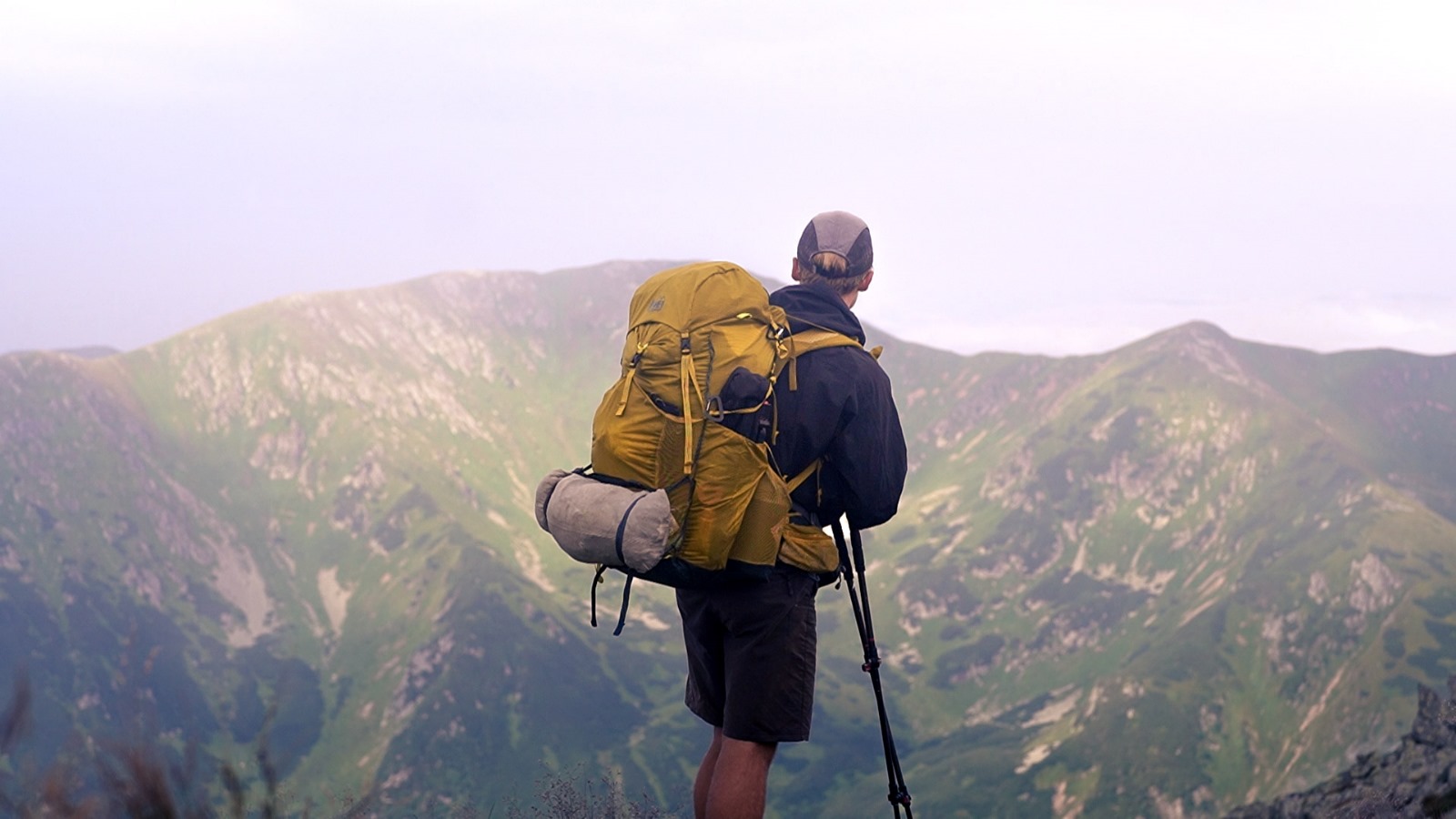
Source: Nikita Grachev, 2024
Image n. 4: During the descent from the Kozí chrbát mountain, 1330 m a.s.l.

Source: Nikita Grachev, 2024
Image n. 5: Solitude in Tuz Gölü Salt Lake, Turkey
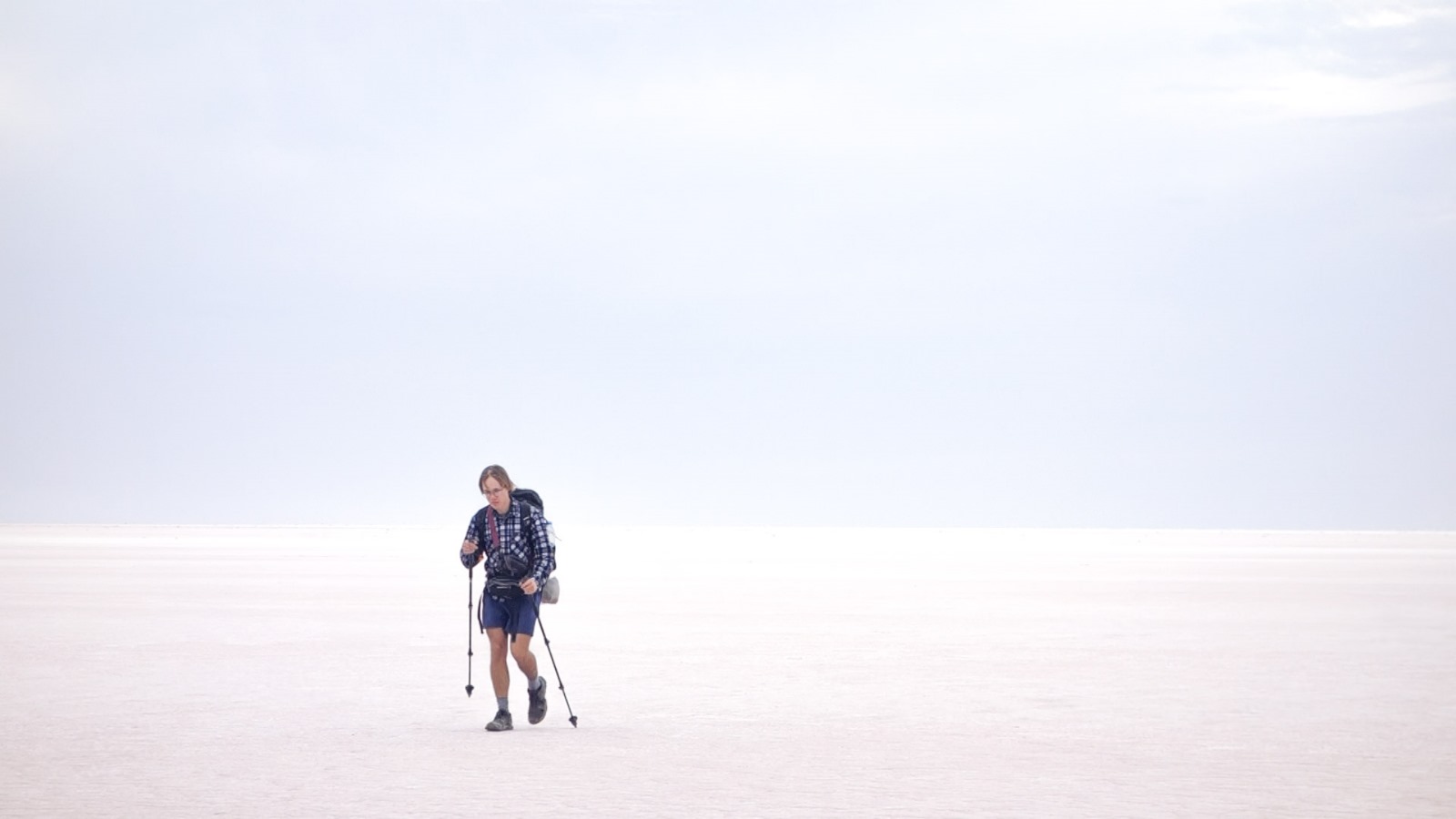
Source: Nikita Grachev, 2023
Discussion. What we consider the most distinctive result of the survey is not the answers themselves, but rather what lies behind them. And it is the issue of differentiation between everyday life and travel. It was subconsciously mentioned in many answers such as “When traveling, I have more time to stop, engage in activities, and think about things that I don’t have time for in the cycle of ordinary days.” or “Travelling certainly helps with self–discovery, because a person experiences new things and immerses themselves in another life, at least for a short time.” Travel can be considered a ritual, a catharsis, a transitory phase (Jaššová, 2020: 11) or a sacred time that sets us apart from the mundane reality (Ting – Kahl, 2016: 49). There is something extraordinary about travel, something that transcends our reality. Van Gennep (2018) saw travelling as a rite of passage. In such moments, the traveller may experience disorientation during liminal phases. Travel represents an alternative environment, an enclave where time, space, and responsibilities are relative, allowing to reinvent one‘s identity. It is also a form of regression, offering the opportunity to explore new roles. Travelling offers a distinction, a bubble of freedom in which we disconnect to reconnect.
And here we see the problem of postmodern tourism – blurring of the borders, between us and them, life and travel, work and leisure, boredom and experience. As Moravčíková (2024: 9) notes, the shift toward seeking desires, pleasures, and experiences has transformed all aspects of social and cultural life, imbuing them with elements of adventure. This, in turn, alters the rhythms of everyday life. The increasing integration of leisure activities into daily life means that travel for leisure is no longer the primary driving force. As Boschetto Doorly stated, holidaying is changing its semantic meaning – it spills over from the designated calendar time to be granularly woven into every day life (Doorly, 2020: 40). The more we mix work and free time in a bleisure trend, the less we experience the necessary contrast. The more we enhance the mobility of the world, the more difficult is to find our true home as in important opposite of the target destination. And the more we turn ordinary things into gamified experiences, the harder it becomes to be surprised, find joy, or discover something truly special.
Another important aspect is the dichotomy between us and the others. Through travel, we encounter personal narratives and confront the meanings of our existence. By differentiating between ourselves and others, we gain insights not only into who they are but also into who we are. This possibility of comparing often acts as a catalyst for self–awareness, enabling us to recognize what is universal, and what is unique. But here lies the problem – the more the world becomes homogenised, with countries resembling each other, cultures blending together, individuals living and thinking similar one to another, the less we experience the contrasts. When there is no opposition, no surprise, no confrontation, there is no challenge, no growth, no learning. It is possible that the gradual fading of boundaries may be the reason why many fail to achieve the intended outcomes from their travels. The persistence of this question will only increase. And after a few more decades of this ongoing melting progression, we will have to face the harsh reality whether travel is still able to initiate these self–actualisation processes.
Conclusion. Tourism and psychology intersect in numerous ways, creating a dynamic and emerging field with vast shared areas of interest. The growing complexity of our world underscores the need for interdisciplinary approaches. What tourism theorists often analyse are merely the symptoms of more intricate structures. Beyond all the numbers, statistics, and data, there are always individuals with unique motives, needs, and aspirations. As we delve deeper, it becomes evident that the future of tourism is about more than just travel – it is a pathway to internalization, harmonization, stabilization, connection and balance. Interestingly, this new perspective can also be implemented in a bottom–up community development. Tourism participants are not the only ones who learn and evolve. Local actors, interacting with outsiders, also gain a new understanding of themselves. They begin to realize that their experiences, perspectives, and way of life can be valuable and unique to others. However, the necessity of transition (or dichotomy, polarity, differentiation, both on personal and interpersonal level) represents a crucial element of this personal growth. At this juncture, psychology naturally converges with the anthropology of tourism, opening yet another fascinating avenue for exploration.
Poznámky:
7. We see self-actualization as an umbrella term which consists of these components: (self-awareness, self-reflection, self-discovery, self-acceptance, self-esteem, self-improvement, self-motivation, self-efficacy, self-discipline, self-responsibility, self-expres). We see this as a timeline, where at the beginning there is a recognition – self-awareness, followed by the presence – various processes of improvement, discovery, reflection, and ultimately achieving the future – the process of perfecting one´s full potential.
8. We would also like to point out the fact that tourism theory and psychology use quite different terminological and theoretical apparatus, which may cause certain issues. A broader interdisciplinary discussion is required to achieve more clarity in methodological and theoretical approaches applicable in both fields of science.
9. The survey was designed using more informal language without psychological terms to make it more approachable and accessible to the respondents. The complete results will be published in a following paper, together with statistical evaluation and mental mapping.
10. According to Statista.com, 76% of Gen Z and Millenials planned to take a solo trip in 2024.
11. This part was written as an authentic reflection of Nikita Grachev, a Bachelor degree student of Constantine the Philosopher University in Nitra, who specializes in long trails, climbing and speleology.
Literature and sources:
BARÁTH, E. – LEŠKA, M. – HERMOCHOVÁ, S.: Psychologie v cestovním ruchu. Praha: Merkur, 1985.
BONIFACE, B. – COOPER, CH. – COOPER, R.: Worldwide Destinations. The Geography of Travel and Tourism. London: Routledge, 2020.
DOORLY, V. B.: Megatrends Defining the Future of Tourism. A Journey Within the Journey in 12 Universal Truths. Cham: Springer, 2020.
COHEN, E.: A phenomenology of tourist experiences. Sociology, 13, 1979, p. 179-201, [online], (cit. 2025-01-24) Available at: https://journals.sagepub.com/doi/abs/10.1177/003803857901300203.
COHEN, E. – COHEN, S.A.: Current Sociological Theories and Issues in Tourism. Annals of Tourism Research, 39(4), 2012, p. 2177 – 2202, [online], (cit. 2025-01-12) Available at: https://www.sciencedirect.com/science/article/pii/S016073831200109?via%3Dihub.
COHEN, S. – PRAYAG, G. – MOITAL, M.: Consumer behaviour in tourism: Concepts, influences and opportunities. Current Issues in Tourism, 17 (10), 2014, p. 872 – 909, [online], (cit. 2025-01-24) Available at: https://www.tandfonline.com/doi/full/10.1080/13683500.2013.850064.
CROMPTON, J. L.: Motivations for pleasure vacation. Annals of Tourism Research, 6, 4, 1979, p. 408-424, [online], (cit. 2025-01-12) Available at: https://www.sciencedirect.com/science/article/abs/pii/0160738379900045?via%3Dihub.
DANN, G. M. S.: Anomie, Ego-Enhancement and Tourism. Annals of Tourism Research, 4, 4, 1977, p. 184 – 194, [online], (cit. 2025-01-12) Available at: https://www.academia.edu/1534649/Anomie_ego_enhancement_and_tourism.
DOXEY, G. V.: A Causation Theory of Visitor-Resident Irritants: Methodology and Research Inferences. 6th Annual Conference Proceedings of the Travel Research Association, 1975, p. 195-198.
DUJMOVIĆ, M. – VITASOVIĆ, A.: Postmodern Society and Tourism. Journal of Tourism and Hospitality Management, 2015, 3, 9-10, p. 191 – 201, [online], (cit. 2025-01-22) Available at: https://www.davidpublisher.com/Public/uploads/Contribute/55dc27e2aae0a.pdf.
DŽUKA, J. – ŠTEFKO, R.: Psychologické charakteristiky ako prediktory výdavkov turistov: predvýskum u študentov a pilotné overenie u návštevníkov športového podujatia. Psychologie a její kontexty 10 (2), 2019, p. 83 – 101, [online], (cit. 2025-01-20) Available at: https://psychkont.osu.cz/fulltext/2019/2019-2-7-VS_Dzuka-Stefko.pdf.
FERJENČÍK, J.: Úvod do metodologie psychologického výzkumu. Jak zkoumat lidskou duši. Praha: Portál, 2000.
FIGUROVÁ, M.: The Psychology of Happiness: Mindfulness and Experiencing Happiness. Rigorous thesis. Prague: Charles University, 2020.
FILEP, S. – VOLIĆ, I. – SON, I.: On Positive Psychology of Events. Event Management, 19, p. 495-507, [online], (cit. 2025-01-20) Available at: https://www.researchgate.net/publication/288840362_On_Positive_Psychology_of_Events.
FIRAT, F. – CLIFFORD. J.: From segmentation to fragmentation: Markets and marketing strategy in the postmodern era. European Journal of Marketing, 31, 1997, p. 183-207, [online], (cit. 2025-02-02)Available at: https://www.researchgate.net/publication/235259414_From_segmentation_to_fragmentation_Markets_and_marketing_strategy_in_the_postmodern_era.
FLAHERTY, G. – CHAI, S.Y. – HALLAHAN, B.: To travel is to live: embracing the field of travel psychiatry. BJPsych Bulletin, 2021, 45 (3), p. 160 – 170, [online], (cit. 2025-01-28) Available at: https://pubmed.ncbi.nlm.nih.gov/32279684/
GAJDOŠOVÁ, E. – MADRO, M. – VALIHOROVÁ, M. (eds.): Duševné zdravie a wellbeing virtuálnej generácie. Zborník príspevkov z medzinárodnej vedeckej konferencie. Paneurópska vysoká škola: Bratislava, 2018.
GAŽOVÁ, V.: Poznámky k pojmu narcistickej kultúry. In: Ballay, M. (ed.): Nové pragmatické výzvy kulturológie. Nitra: UKF Nitra, 2024, p. 59 – 77.
GOLDSTEIN, K. The Organism: A Holistic Approach to Biology Derived from Pathological Data in Man. New York: American Book Company, 1939.
HOLM, M. R. – LUGOSI, P. – CROES, R. R. – TORRES, E. N.: Risk-tourism, risk-taking and subjective well-being: A review and synthesis, Tourism Management, 63, 2017, p. 115-122, [online], (cit. 2025-01-20) Available at: https://radar.brookes.ac.uk/radar/file/6dfb6b94-ac84-4cf1-978f-b34a4f5b5c14/1/holm2017risk.pdf.
ISO-AHOLA, S. E.: Toward a social psychological theory of tourism motivation: A rejoinder. Annals of Tourism Research 9(2), 1982, p. 256-261.
CHEN, R. – JOYA, A. – CHOI, L.N. – CHOI, S.Y.: An Exploration of Self- Transcedence Through Solo-Travel
Conference: the 2017 CHI Conference Extended Abstracts, 2018, p. 100 – 105, [online], (cit. 2025-01-20) Available at: https://www.researchgate.net/publication/316613771_An_Exploration_of_Self-Transcendence_Through_Solo-Travel.
JAŠŠOVÁ, M.: Poradenstvo pre mladých ľudí pri medzinárodných pobytoch. SAAIC: Bratislava, 2020.
JUNG, C. G.: Duše moderního člověka. Praha: Atlantis, 1994.
KAUFMAN, S. B.: Self-actualizing people in the 21st century: Integration with contemporary theory and research on personality and well-being‘, Journal of Humanistic Psychology, 60 (3), 2018. p. 304 – 351, [online], (cit. 2025-01-20) Available at: https://journals.sagepub.com/doi/full/10.1177/0022167818809187.
KONSTANTOPOULOU, CH. – VARELAS, S. – LIARGOVAS, P.: Well-Being and Tourism :A Systematic Literature Review. Economies 12, 281, 2024, p. 1 – 18, [online], (cit. 2025-01-20) Available at: https://www.researchgate.net/publication/385125805_WellBeing_and_Tourism_A_Systematic_Literature_Review
LOPUCH, J.: Motivace v temném cestovním ruchu. Diploma thesis. Brno: Masarykova univerzita, 2017.
MASLOW, A. H.: A Theory of Human Motivation. Psychological Review, 50, 1943, p. 370 – 396, [online], (cit. 2025-01-20) Available at: https://scholar.google.com/.
McCABE, S. – JOHNSON, S.: The Happiness Factor in Tourism: Subjective Well-being and Social Tourism,Annals of Tourism Research, 41, 2013, p. 42-65, [online], (cit. 2025-01-20) Available at: https://www.sciencedirect.com/science/article/pii/S0160738312001612.
MILDE, L.M.: Who Am I?: The Reflexivity of Self-Identity Through Tourism. Master´s Theses. San Jose: San Jose State University, 2010.
MORAVČÍKOVA, E.: Zrod homo consumericus a genéza (hyper)konzumnej kultúry. In: Ballay, M. (ed.): Nové pragmatické výzvy kulturológie. Nitra: UKF Nitra, 2024, p. 8 – 24.
MURPHY, R.: Úvod do sociálnej a kultúrnej antropológie. Praha: Sociologické nakladatelství, 1998.
MACKETT, R.L.: Mental health and travel behaviour. Journal of Transport & Health, 22, 2021, p. 1 – 10. [online], (cit. 2025-01-20) Available at: https://www.sciencedirect.com/science/article/pii/S2214140521001730.
NEAL, J. D. – SIRGY, M. J. – UYSAL, M.: The role of satisfaction with leisure travel/tourism and Experience in satisfaction with leisure life and overall life. Journal of Business Research, 44, 1999, p. 153-163, [online], (cit. 2025-01-29) Available at: https://www.researchgate.net/publication/223738170_The_Role_of_Satisfaction_with_Leisure_Travel_Tourism_Services_and_Experience_in_Satisfaction_with_Leisure_Life_and_Overall_Life.
OTČENÁŠEK, J.: Antropologie narativity – problematika české pohádky. Praha: Etnologický ústav Akademie věd ČR, 2012.
PEARCE, P.L. – PACKER, J.: Minds on the move: New links from psychology to tourism. Annals of Tourism Research, 40, 2013, p. 386-411, [online], (cit. 2025-01-25) Available at: https://www.sciencedirect.com/science/article/abs/pii/S016073831200148X.
PEARCE, P.L. – STRINGER, P.F.: Psychology and Tourism. Annals of Tourism Research, 18, 1991, p. 136 – 154, [online], (cit. 2025-01-25) Available at: https://www.sciencedirect.com/science/article/abs/pii/016073839190044C.
PERSONEN, J. – KOMPPULA, R. (ed.): Tourism engagement: co-creating well-being. Proceedings of the 6th Advances in Tourism Marketing Conference. Joensuu Finland: University of Eastern Finland, 2015.
PLOG, S.: Why Destination Areas Rise and Fall in Popularity: An Update of a Cornell Quarterly Classic. Cornell Quarterly Classic. Cornell University, 4, 2001, s. 13-24, [online], (cit. 2025-01-25) Available at:https://www.researchgate.net/publication/247274014_Why_Destination_Areas_Rise_and_Fall_In_Popularity_An_Update_of_a_Cornell_Quarterly_Classic.
PŮTOVÁ, B.: Antropologie turismu. Praha: Karlova univerzita, 2019.
SIRGY, M. J. – KRUGER, P. S. – LEE, D. – YU, G. B.: How does a travel trip affect tourists’ life satisfaction? Journal of Travel Research, 50, 2011, 261-275, [online], (cit. 2025-02-02) Available at: https://www.researchgate.net/publication/249701196_How_Does_a_Travel_Trip_Affect_Tourists‘_Life_Satisfaction.
SIRGY, M. – UYSAL, M.: Developing a Eudaimonia Research Agenda in Travel and Tourism, 2016, [online], (cit. 2025-02-02) Available at: https://psycnet.apa.org/record/2016-54448-032.
SOKOLOVÁ, T.: Psychologie cestovního ruchu: Motivace cestovat a představy o cestování příslušníků generace Z. Bachelor thesis. Hradec Králové: Univerzita Hradec Králové, 2022. STATISTA. Share of Gen Z and millennial travelers who planned to take a solo trip worldwide as of February 2024. Available at: https://www.statista.com/statistics/1477280/gen-z-millennials-planning-solo-travel-worldwide/.
STUDY ON GEN Z TRAVELLERS. Brusel: European Travel Commission, 2020. [online]. [cit. 2025 –01-12]. Available at: https://etc-corporate.org/uploads/2020/07/2020_ETC-Study-Generation-Z-Travellers.pdf.
ŠIMKOVÁ, E.: Psychology and its application in tourism. Procedia – Social and Behavioral Sciences, 114, 2014, p. 317 – 321, [online], (cit. 2025-02-03) Available at: https://www.researchgate.net/publication/270848051_Psychology_and_its_Application_in_Tourism.
ŠUMICHRASTOVÁ, K.: Súčasné preferencie mladých ľudí v cestovnom ruchu zo Slovenska. Bachelor thesis. Brno: Mendelova univerzita, 2017.
TING, A.E. – KAHL, CH.: Self Discovery and Backpackers: A conceptual paper about liminal experience. International Journal of Religious Tourism and Pilgrimage, 4, 1, 2016, p. 48 – 58, [online], (cit. 2025-02-03) Available at: https://arrow.tudublin.ie/cgi/viewcontent.cgi?article=1097&context=ijrtp.
VAN GENNEP, A.: Přechodové rituály. Systematické studium rituálů. Praha: Portál, 2018.
ZHU, J. – FAN, Y.: Daily travel behaviour and emotional well-being: Effects of trip mode, duration, purpose and companionship. Transportation Research Part A, 118, 2018, p. 360 – 373, [online], (cit. 2025-02-04). Available at: https://www.sciencedirect.com/science/article/abs/pii/S0965856417301842.
Kontakt:
PhDr. Michala Fúsková, PhD.
ÚMKTKE FF UKF v Nitre
Štefánikova 67
949 74 Nitra
E-mail: mfuskova@ukf.sk
Nikita Grachev
(študent Bc. štúdia)
ÚMKTKE FF UKF v Nitre
Štefánikova 67
949 74 Nitra
E-mail: nikita.grachev@student.ukf.sk